
Clean Air for Hardening Shops
Metal hardening involves a range of processes, including salt bath hardening, induction hardening, and gas hardening, each with specific requirements for exhaust air filtration. While the methods differ, they all include two main steps: heating the workpieces and then rapidly cooling them. These stages generate emissions that must be effectively captured and filtered.
The Suitable Extraction Solution for Any Application
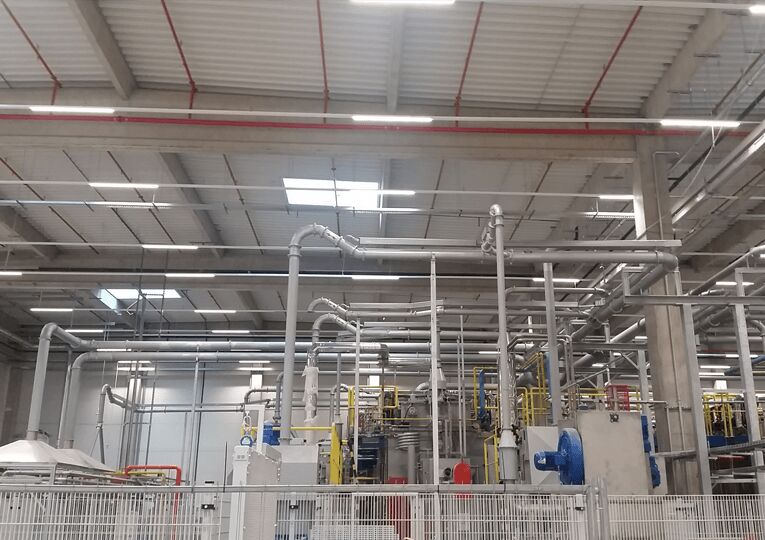
Salt bath hardening processes can use either dry or wet extraction systems, depending on the type of salt and specific application. In most cases, dry systems are preferred due to their higher energy efficiency. However, when aqueous quenching solutions are used, a wet system is recommended to handle the resulting moisture.
In induction hardening, parts are rapidly heated and simultaneously quenched with a water-miscible high-temperature oil. Keller coolant mist separators are ideal for this application. They feature an automatic cleaning system designed specifically for highly viscous aerosols, allowing for continuous, uninterrupted operation.
Gas hardening processes typically require wet separators with a pre-spray system to reduce fire risk from open flames. After collection, the exhaust air is quenched with water to protect the ductwork and prevent ignition hazards.
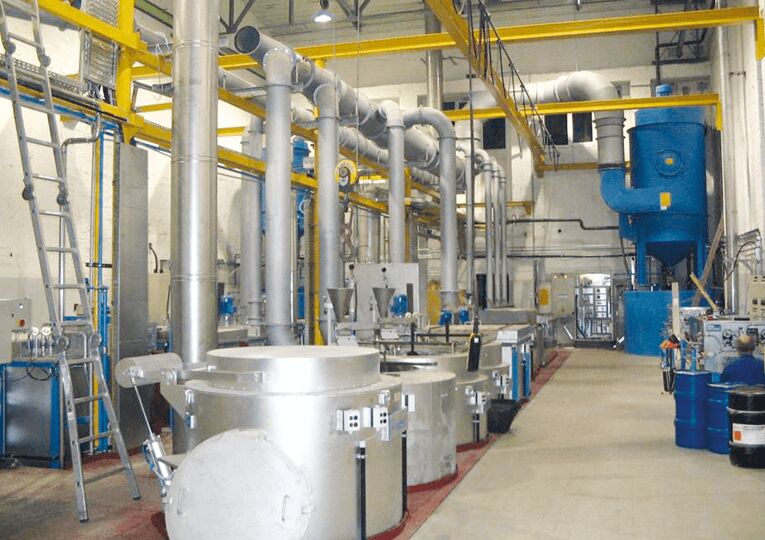
"Hardening shop benefits from Keller Lufttechnik After-Sales Service"
To the success storyReferences Hardening
These customers rely on our extraction systems during hardening.
Haas Metallguß GmbH, Mühlhausen im Täle - Germany
Gewinde Satelliten Antriebe AG, Horriwil - Switzerland
Mubea - Muhr und Bender KG, Attendorn - Germany
Metaldyne Oslavany, spol. s r.o., Oslavany - Czech Republic
... and many more!
Links
Used Products
Dust Collector JET-SET >>
Venturi Wet Separator VDN >>
Explosion Protection
Information About "Explosion Protection According to ATEX" >>
Set and Guidelines
TA-Luft: Air pollution control - emission standards >>
42. BImSchV: Avoiding legionella risk in wet scrubbers >>
VDI 2262-3: Air quality in the workplace - clean air recirculation >>
TRGS 900: Occupational limit values in the workplace >>
TRGS 561: Processing of carcinogenic metals >>
TRGS 528: Welding operations >>
DGUV-Regel 109-001 (fomerly: BGR 109): Grinding, brushing and polishing of aluminum >>
DGUV-Regel 109-002 (formerly: BGR 121): Workplace ventilation >>
DGUV-Regel 109-011 (formerly: BGR 204): Magnesium processing >>
1999/92/EG (formerly: ATEX 137): Explosion Protection Directive for Operators >>
2014/34/EU (formerly: ATEX 114): Explosion Protection Directive for Manufacturers >>
EN 1127-1: Explosive environments >>
TRBS 727: Avoiding ignition hazards created by electrostatic charges >>
VDI 2263-6: Fire and explosion protection for dust extraction systems >>